

 Business License

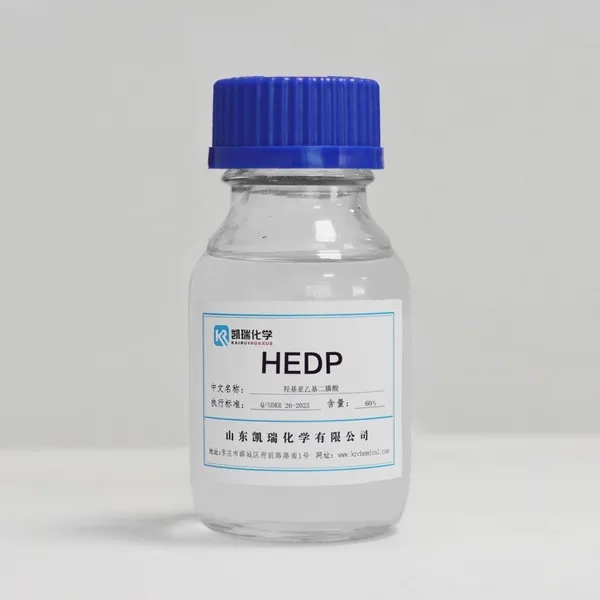
Scale inhibitor 1-Hydroxy Ethylidene-1,1-Diphosphonic Acid (HEDP)
1-Hydroxy Ethylidene-1,1-Diphosphonic Acid (HEDP) is an organophosphonic acid scale and corrosion inhibitor widely used in water treatment systems. It is also known as Etidronic Acid, HEDPA, or Dequest 2010.
Key Properties
Molecular Formula: C₂H₈O₇P₂
Molecular Weight: ~206
Appearance: Colorless or pale yellow transparent liquid (or white crystalline powder in solid form)
Thermal Stability: Remains effective up to 250°C
pH Resistance: Stable under high pH conditions, not easily hydrolyzed
Main Applications
1. Scale Inhibition
HEDP effectively prevents the formation of calcium carbonate, calcium sulfate, and other mineral scales by chelating metal ions (especially calcium) to form stable hexagonal ring complexes. It has a strong chelating ability with Fe, Cu, and Zn ions and can dissolve oxidized materials on metal surfaces.
2. Corrosion Inhibition
HEDP can form protective films on metal surfaces, making it effective for corrosion protection of steel, copper, and other equipment.
3. Circulating Cooling Water Systems
Used in power plants, chemical plants, metallurgy, fertilizer production, and air conditioning cooling systems.
4. Other Industrial Applications
Low-pressure boiler water treatment
Reverse osmosis system scale prevention
Non-cyanide electroplating as a chelating agent
Textile and dyeing auxiliaries (as stabilizer and dispersant)
Household and industrial cleaners
Recommended Dosage
Application Dosage Range
Scale Inhibitor 1 – 10 mg/L
Corrosion Inhibitor 10 – 50 mg/L
Cleaning Agent / Detergent 1000 – 2000 mg/L
Note: HEDP is typically used in combination with polycarboxylate scale inhibitors and dispersants for synergistic effects. The actual dosage should be determined based on specific water quality conditions and system requirements.
Formulations and Recent Advances
Conventional Use
In industrial circulating cooling water systems, HEDP is often formulated into composite scale inhibitors. For example, one formulation for high-hardness, high-alkalinity water contains HEDP combined with polyaspartic acid, polymaleic anhydride, and polyacrylic acid dispersants.
Controlled-Release Technology
Recent research has developed cement-based controlled-release beads (CRBs) that encapsulate HEDP for sustained, passive release in flowing water systems. This approach converts continuous chemical injection into intermittent, passive release, reducing operational intensity and chemical waste. The release behavior follows a two-stage pattern: an initial rapid release followed by a slower, sustained phase. Key factors affecting release include bead size, temperature, and flow velocity.
Microencapsulation
HEDP encapsulated in melamine-formaldehyde microcapsules has demonstrated approximately 86% scale inhibition efficiency by inducing lattice distortion in calcium carbonate crystals.
Safety and Storage
Safety: HEDP is acidic. Avoid contact with eyes and skin. If contact occurs, rinse immediately with plenty of water.
Storage: Store in a cool, dry, and well-ventilated indoor area, protected from moisture. Shelf life is typically 10–12 months.
Advantages
Excellent thermal stability up to 250°C
Superior resistance to acid, alkali, and chlorine oxidation compared to other organophosphonates
Low toxicity and environmentally friendly profile (does not bioaccumulate significantly)
Compatible with other water treatment chemicals

Contact Us
Recommended Products
-
 PAC Applications/PAC ManufacturersNegotiableMOQ: 1 Ton
 -
HEDP Manufacturers/HEDP Introduction/CAS 2809-21-4US$ 999 - 9999MOQ: 1 Ton
-
Specifications for Using Migrating Corrosion InhibitorUS$ 999 - 9999MOQ: 1 Ton
-
What is the Antiscaling Effect of HEDP Antiscalant?-Kairui ChemistryUS$ 999 - 9999MOQ: 1 Ton
-
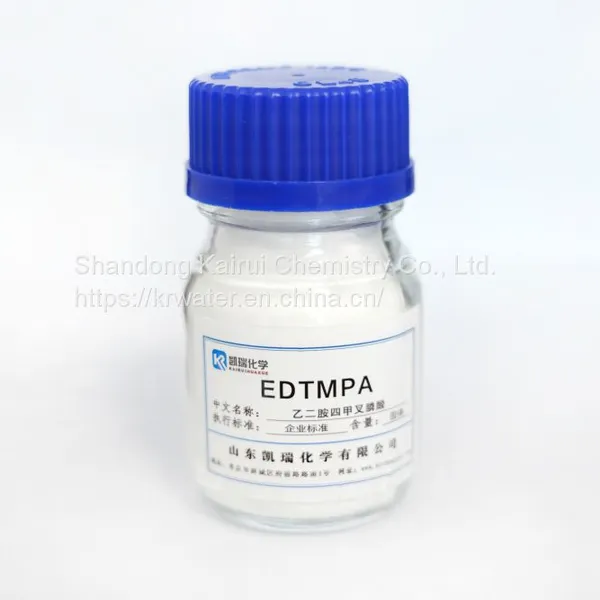
Water Treatment Chemical/Ethylene Diamine Tetra (Methylene Phosphonic Acid) EDTMPA (Solid)NegotiableMOQ: 1 Ton
-
In What Fields Can ATBS.Na be Applied?US$ 99 - 9999MOQ: 1 Chain
-
HMDTMPA/Water Treatment Chemicals/Corrosion Inhibitors/HMDTMPA ManufacturersUS$ 99 - 9999MOQ: 1 Ton
-
Things to Note in HEDP Applications/scale Inhibition HEDP/Scale InhibitionNegotiableMOQ: 1 Ton
-
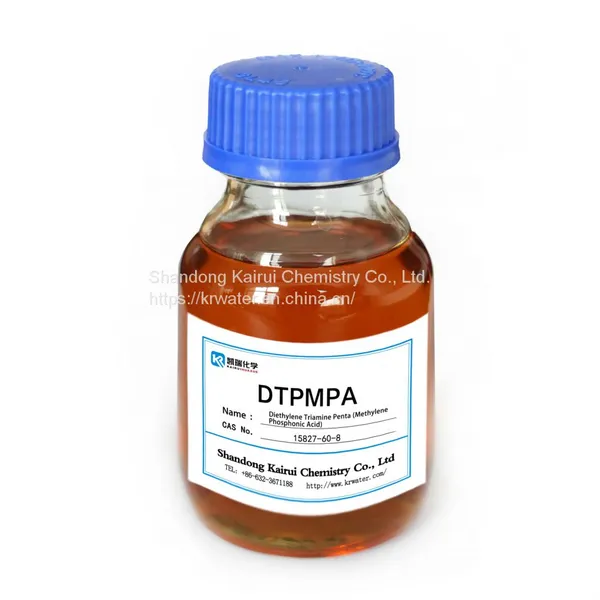
Diethylene Triamine Penta (Methylene Phosphonic Acid) (DTPMPA)US$ 99 - 9999MOQ: 1 Ton
-
What is the Difference Between HEDP and ATMP?US$ 99 - 9999MOQ: 1 Ton
-
Application of ATMP in Daily Chemicals/ATMP ManufacturersUS$ 99 - 9999MOQ: 1 Ton
-
Chemical PCA/Dispersants PCA/PCANegotiableMOQ: 1 Ton
-
Application of HEDP in Daily ChemicalsUS$ 99 - 9999MOQ: 1 Ton
-
The Mechanism of Action of HEDP as a Corrosion and Scale InhibitorUS$ 99 - 9999MOQ: 1 Ton
-
HPMA/Corrosion Inhibitors/Chelating Agents/Water Treatment ChemicalsNegotiableMOQ: 1 Ton
-
HEDP/Water Treatment Chemicals/Corrosion Inhibitors/Chelating AgentsUS$ 99 - 9999MOQ: 1 Ton
-
HPAA/HPAA Scale InhibitorUS$ 999 - 9999MOQ: 1 Ton
-
What Are the Solubility and Stability of HEDP?US$ 99 - 9999MOQ: 1 Ton
-
Can PASP be Used in the Daily Chemical Industry?US$ 999 - 9999MOQ: 1 Ton
-
Precautions in Using Reverse Osmosis AgentUS$ 999 - 9999MOQ: 1 Ton
