

 Business License

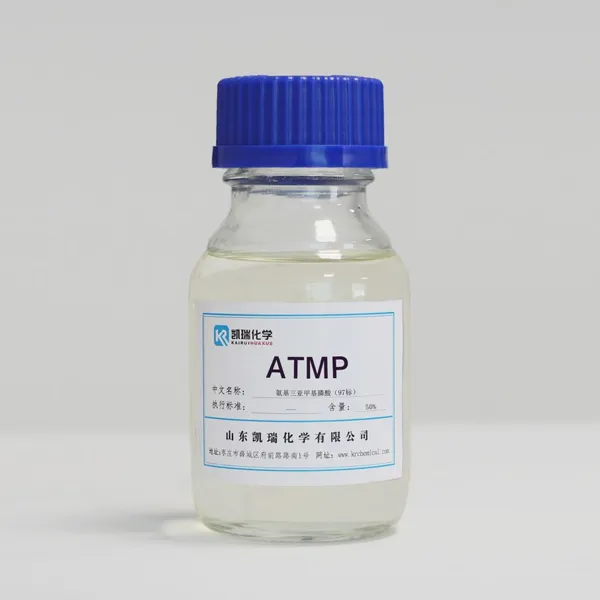
ATMP scale inhibitor, ATMP price
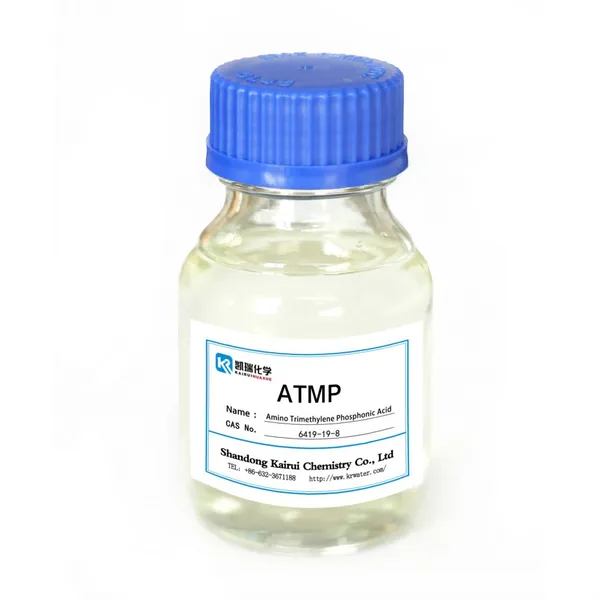
ATMP (Amino Trimethylene Phosphonic Acid) is a highly effective scale inhibitor widely used in industrial water treatment. Its working principle is based on a combination of chemical and physical interactions that prevent the formation and deposition of scale (primarily carbonate, sulfate, and phosphate salts of calcium and magnesium).
Here is a detailed introduction to its working principle:
1. The "Threshold Effect" (Crystal Distortion)
This is the most important mechanism of ATMP.
How Scale Normally Forms: In supersaturated water (containing high levels of Ca²⁺, Mg²⁺, and CO₃²⁻), ions begin to collide and form microscopic crystal nuclei. These nuclei grow into larger crystals that eventually precipitate and stick to pipe surfaces as hard scale.
How ATMP Works: ATMP molecules are extremely active even at very low concentrations (a few ppm). They adsorb onto the surface of the forming microscopic crystal nuclei.
The Result: By attaching to the active growth sites of the crystal, ATMP distorts the crystal lattice. The crystal cannot grow into its normal, regular, hard structure. Instead, it becomes irregular and deformed. These distorted crystals are less likely to adhere to surfaces and remain suspended in the water.
2. Chelation and Complexation
Mechanism: The phosphonic acid groups in the ATMP molecule have a strong ability to bind with metal ions (such as Calcium Ca²⁺, Magnesium Mg²⁺, Iron Fe²⁺, etc.).
The Result: ATMP forms stable, water-soluble chelates with these ions. This keeps the ions dissolved in the water, effectively reducing the "free" concentration of scaling ions and raising the threshold at which they can precipitate to form scale.
3. Dispersion
Mechanism: Once ATMP has distorted and prevented the growth of scale crystals, it also acts as a dispersant.
The Result: The negatively charged ATMP molecules adsorbed onto the particles create an electrostatic repulsion between particles. This prevents the small, distorted particles from coming together to form larger agglomerates that could settle out of the water or deposit onto surfaces. They are kept floating harmlessly in the water column to be removed during blowdown.
4. Lattice Distortion (Further Detail)
Even if the calcium ions eventually manage to precipitate, the presence of ATMP ensures that the precipitate is weak.
Without ATMP: Forms hard, dense, and adherent Calcite (the problematic scale).
With ATMP: Forces the precipitate to form soft, non-adherent, and easily flushed-away sludge.
Summary of ATMP's Action
ATMP prevents scale through a three-step process:
Captures metal ions (Chelation).
Distorts the growing crystals (Threshold Effect).
Repels the particles to prevent settling (Dispersion).
This triple action makes ATMP particularly effective in alkaline conditions and high-temperature environments (such as cooling water systems, boilers, and oilfield water injection) where scale formation is a severe problem.

Contact Us
Recommended Products
-
 PAC Applications/PAC ManufacturersNegotiableMOQ: 1 Ton
 -
HEDP Manufacturers/HEDP Introduction/CAS 2809-21-4US$ 999 - 9999MOQ: 1 Ton
-
Specifications for Using Migrating Corrosion InhibitorUS$ 999 - 9999MOQ: 1 Ton
-
What is the Antiscaling Effect of HEDP Antiscalant?-Kairui ChemistryUS$ 999 - 9999MOQ: 1 Ton
-
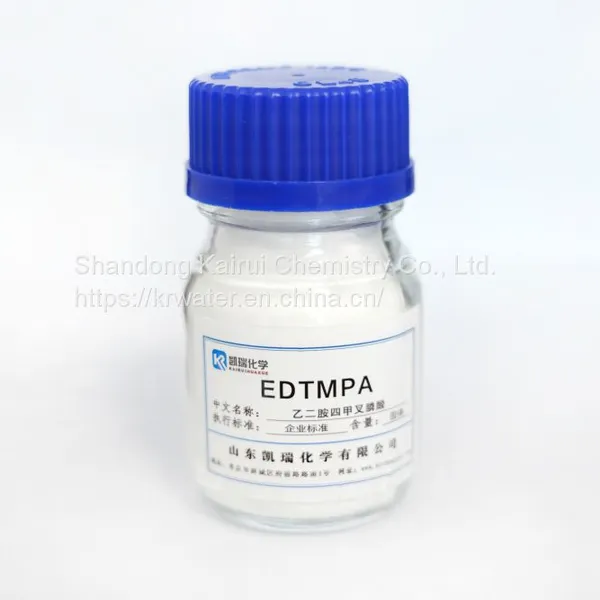
Water Treatment Chemical/Ethylene Diamine Tetra (Methylene Phosphonic Acid) EDTMPA (Solid)NegotiableMOQ: 1 Ton

-
In What Fields Can ATBS.Na be Applied?US$ 99 - 9999MOQ: 1 Chain
-
HMDTMPA/Water Treatment Chemicals/Corrosion Inhibitors/HMDTMPA ManufacturersUS$ 99 - 9999MOQ: 1 Ton
-
Things to Note in HEDP Applications/scale Inhibition HEDP/Scale InhibitionNegotiableMOQ: 1 Ton
-
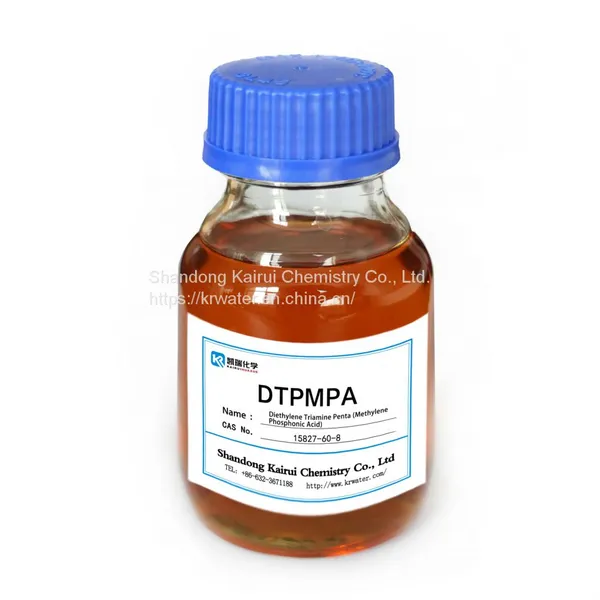
Diethylene Triamine Penta (Methylene Phosphonic Acid) (DTPMPA)US$ 99 - 9999MOQ: 1 Ton
-
What is the Difference Between HEDP and ATMP?US$ 99 - 9999MOQ: 1 Ton
-
Application of ATMP in Daily Chemicals/ATMP ManufacturersUS$ 99 - 9999MOQ: 1 Ton
-
Chemical PCA/Dispersants PCA/PCANegotiableMOQ: 1 Ton
-
Application of HEDP in Daily ChemicalsUS$ 99 - 9999MOQ: 1 Ton
-
The Mechanism of Action of HEDP as a Corrosion and Scale InhibitorUS$ 99 - 9999MOQ: 1 Ton
-
HPMA/Corrosion Inhibitors/Chelating Agents/Water Treatment ChemicalsNegotiableMOQ: 1 Ton

-
HEDP/Water Treatment Chemicals/Corrosion Inhibitors/Chelating AgentsUS$ 99 - 9999MOQ: 1 Ton
-
HPAA/HPAA Scale InhibitorUS$ 999 - 9999MOQ: 1 Ton
-
What Are the Solubility and Stability of HEDP?US$ 99 - 9999MOQ: 1 Ton
-
Can PASP be Used in the Daily Chemical Industry?US$ 999 - 9999MOQ: 1 Ton
-
Precautions in Using Reverse Osmosis AgentUS$ 999 - 9999MOQ: 1 Ton
